
Path: Workspace Homepage >> Navigation Panel >> Settings >> Workspace Info >> Miscellaneous
| What is IdeaScale MCP Server with Co-Pilot? |
|---|
|
IdeaScale MCP Server with Co-Pilot is an integration that connects a Microsoft Copilot Studio agent to IdeaScale's MCP (Model Context Protocol) server, allowing the agent to securely retrieve and interact with community data through API keys and service tokens. |
The integration allows a Copilot Studio agent to be configured as a client of the IdeaScale MCP server, so the agent can access community data on behalf of a connecting Administrator or Moderator. Data returned through the connection is scoped to the roles and permissions already assigned to that user within IdeaScale, and the MCP server must be enabled for the workspace before any client can connect.
Role Permissions
- Workspace Administrator: Enables the MCP Server setting for the workspace and configures workspace-level access.
- Community Administrator: Can connect a client, such as a Copilot Studio agent, to the MCP server and retrieve data in line with their assigned permissions.
- Community Moderator and Campaign Moderator: Can connect a client to the MCP server and retrieve data in line with their assigned permissions.
- Member: Does not have access to the MCP Server.
Note: IdeaScale MCP Server is available only to the Community admins and any type of moderartors. Normal members do not have access to it.
TABLE OF CONTENTS
Enabling the MCP ServerSetting Up IdeaScale MCP Server with Co-Pilot
Configuring the Tool
Connecting the Tool
Exceptions
Frequently Asked Questions
Enabling the MCP Server
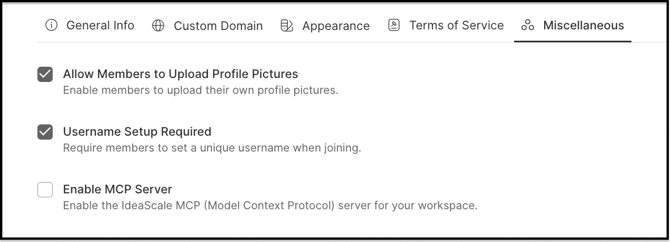
Before an Administrator or Moderator can connect a client to the IdeaScale MCP server, a Workspace Administrator must enable it by navigating to Workspace Homepage >> Navigation Panel >> Settings >> Workspace Info >> Miscellaneous >> Enable MCP Server and switching it on.
The IdeaScale MCP server is designed to work with a range of LLM clients, including Claude and Cursor IDE. Compatibility should be confirmed against the specific LLM client being used.
Setting Up IdeaScale MCP Server with Co-Pilot
Once the MCP Server setting has been enabled for the workspace, the following steps configure a Microsoft Copilot Studio agent as a client of the IdeaScale MCP server.
Creating a Copilot Studio Agent
- Create an account at Copilot Studio: https://copilotstudio.microsoft.com/
- Once the account has been created, the Copilot Studio homepage is displayed.
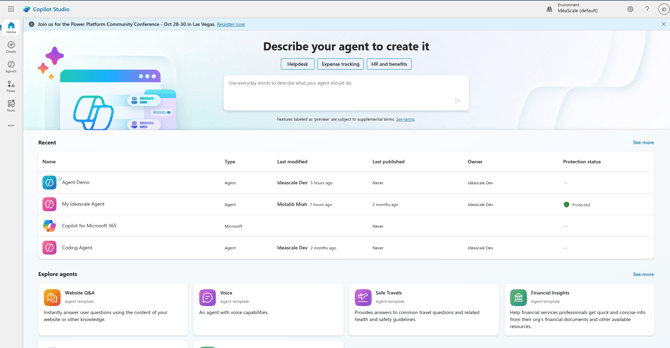
3. Select the Agents tab to create a new agent.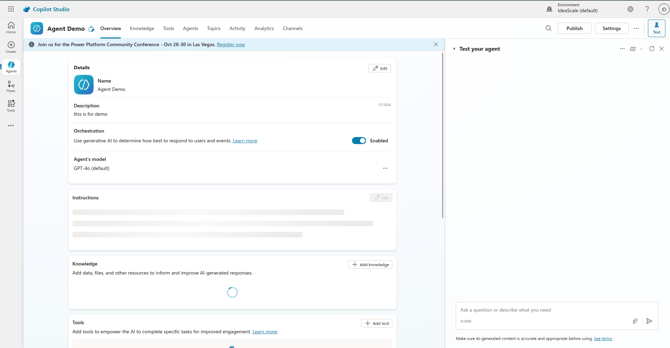
4. After creating the agent, select it and navigate to the Tools tab to begin adding tools.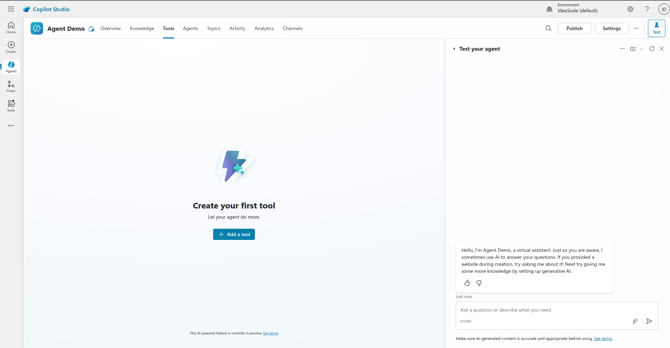
Adding the MCP Server as a Tool
- Select Model Context Protocol from the list of available tools, then select the New Tool button.
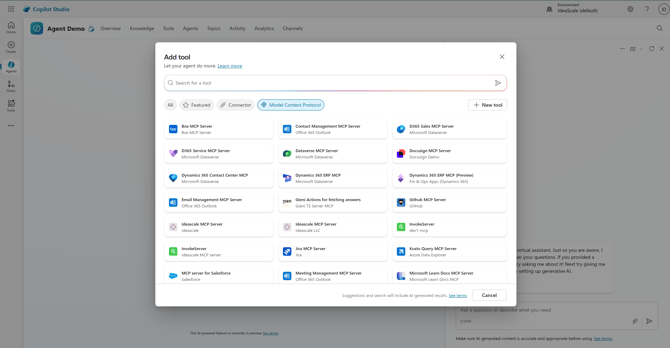
2. A new window opens, prompting selection of Model Context Protocol from the available options and completion of a required form.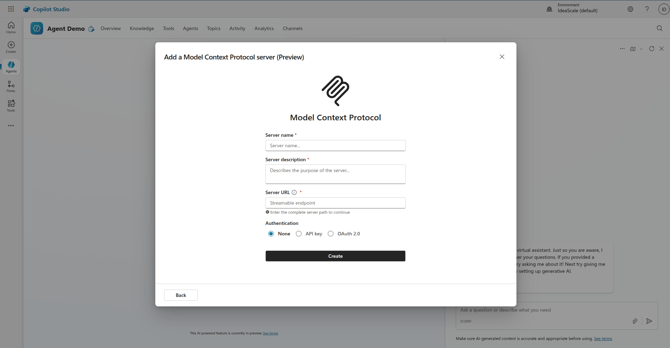
3. Fill in the required details while selecting authentication option as API Key.-2.png?width=670&height=349&name=image%20(1)-2.png)
Note:
- When users connect via OAuth (Open Authorization), they should enter the Remote MCP Server URL.
- When users connect using an API token, they should use the following URL instead:
https://your_community_url/mcp.
Configuring the Tool
Complete the form using API Key as the authentication option, and fill in the following fields:
- Server Name: Any name of the connecting user's choice.
- Server Description: A brief explanation of the server being used.
- Server Url: Obtained from Workspace >> Profile >> Settings >> MCP Server.
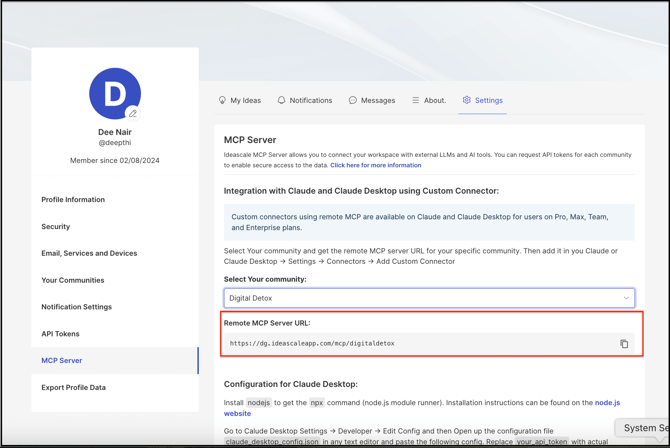
Note: The Server Url entered depends on the authentication method selected. See Exceptions below for the two supported connection methods.
Connecting the Tool
- After completing the form, the connection status displays as Not Connected. Select it to create a new connection.
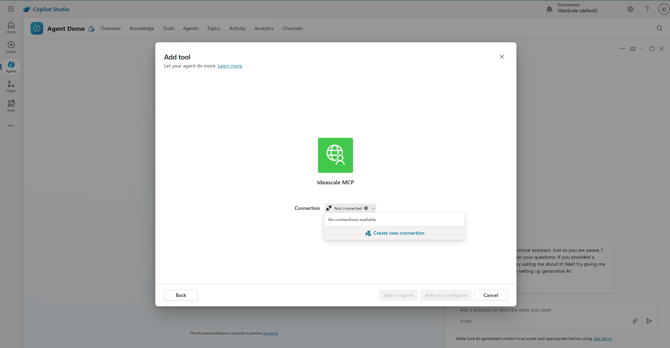
2. Enter the API token from the IdeaScale community. The API token is obtained from Profile >> Settings >> API Tokens.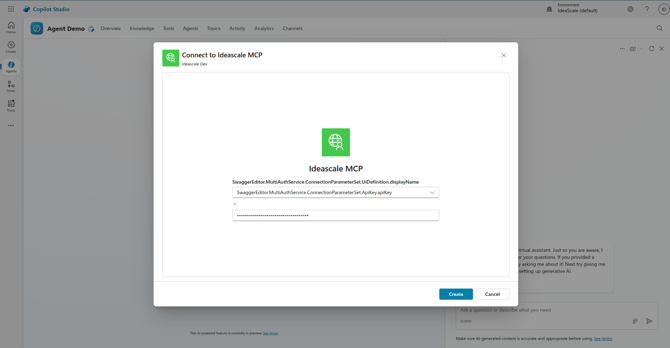
3. Once the API token is added, the connection status updates to Connected, and the tool can be added to the agent.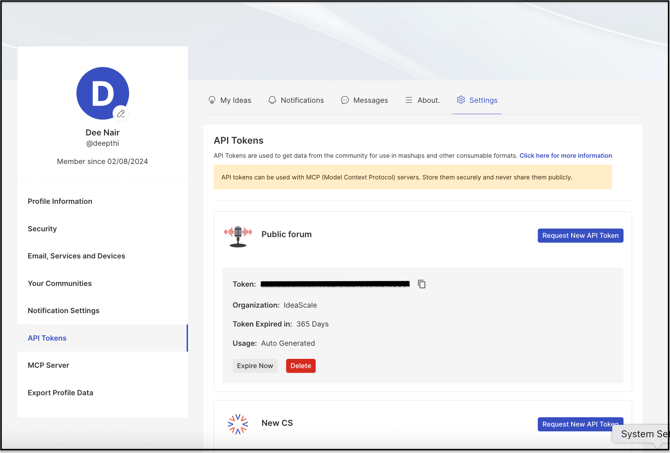
4. With setup complete, the agent is ready to use the MCP server to access and manage community data.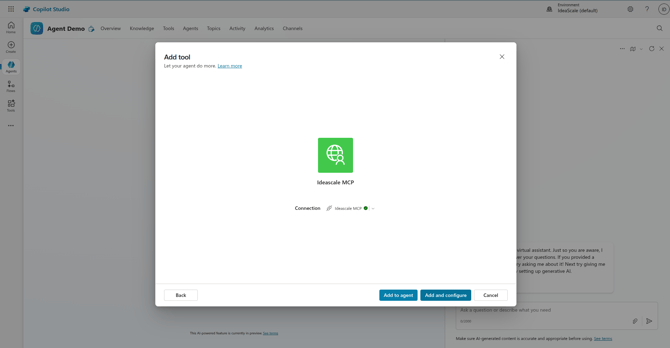
Your setup is now complete, and you’re ready to leverage the MCP server to access and manage your community data efficiently.-2.png?width=670&height=349&name=image%20(2)-2.png)
Exceptions
- OAuth Authentication: Users connecting through OAuth (Open Authorization) enter the Remote MCP Server URL in the Server Url field.
- API Token Authentication: Users connecting with an API token use the following URL instead: https://your_community_url/mcp
Frequently Asked Questions
Who can use the IdeaScale MCP Server with Co-Pilot integration?
Community Administrators and Moderators of any type can connect a Copilot Studio agent to the IdeaScale MCP server once a Workspace Administrator has enabled the setting. Members do not have access.
Where is the MCP Server setting enabled?
A Workspace Administrator enables it by navigating to Workspace Homepage >> Navigation Panel >> Settings >> Workspace Info >> Miscellaneous >> Enable MCP Server and switching it on.
Where can the Server Url be found?
The Server Url is obtained from Workspace >> Profile >> Settings >> MCP Server. Which value to enter depends on the authentication method selected — see Exceptions above.
Where can the API token be found?
The API token is obtained from Profile >> Settings >> API Tokens within the IdeaScale community.
Is the IdeaScale MCP server limited to Copilot Studio?
No. The IdeaScale MCP server is designed to work with a range of LLM clients, including Claude and Cursor IDE. Compatibility should be confirmed for the specific LLM client being connected.
Related Articles